Resistance Is Not Defiance. It's Development.
When your kid pushes back, your first thought might be "they don't respect me." After eight kids and thousands of standoffs, here's what we've learned: resistance isn't disrespect — it's development.

Resistance Is Not Defiance. It's Development.
Your kid pushes back and the first thought that hits is: "They don't respect me."
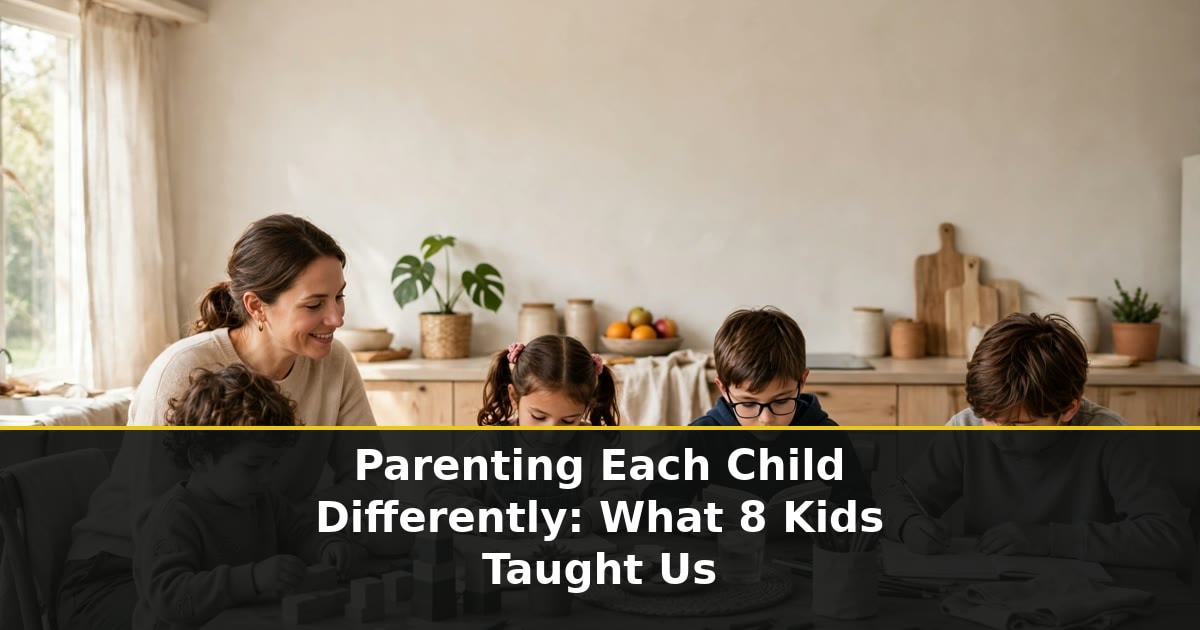
We know that thought well. We've had it — oh, let's be honest — thousands of times. Eight kids, and every one of them has stood in our kitchen, arms crossed, jaw set, telling us our rule was wrong, our decision was unfair, our plan was stupid.
And here's what we've learned after all those standoffs: when a child pushes back, what they're actually saying is, "I'm trying to figure out who I am."
That's not disrespect. That's development.
What pushback really is
Think about it. The kid who never pushes back never learns to stand up for herself. She just folds — at home, at school, in friendships, eventually in relationships and at work. We don't want that for our kids.
The kid who pushes back is practicing. They're testing out their own voice, their own reasoning, their own sense of fairness. Home is supposed to be the safe place to do that — the training ground where the stakes are low and the people across the table love them no matter what.
Now, let's be real: that doesn't mean you let them run the house. Nobody is suggesting you hand over the keys and say, "Sure, bedtime is whenever you feel like it." Boundaries are still your job. But the goal isn't to crush the resistance. The goal is to channel it.
Crush it and you get compliance — a kid who obeys in front of you and hides everything from you. Channel it and you get something much better: a kid who can disagree with you respectfully, which is exactly what you want them to be able to do out in the world.
Kids who learn to advocate for themselves at home become adults who can advocate for themselves in the world.
What this looked like in our house
We had one of ours — we won't name names, but if you're one of the eight reading this, you know exactly who you are — who questioned everything. Every rule had to survive a cross-examination. "Why can't I?" was basically a catchphrase. It was exhausting.
Our instinct, especially early on, was to shut it down. "Because I said so" is the fastest way to end an argument, and some days we just didn't have anything left.
But here's what we noticed: the kids we let argue — respectfully, without yelling or name-calling — became the ones who could walk into a coach's office, a teacher's classroom, a boss's office and calmly make their case. The ones we shut down every time? They either went quiet everywhere or they blew up at the wrong people.
So we changed the rule in our house. You can push back. You can tell us you think we're wrong. But you do it respectfully, and you accept the final answer once we've heard you out.
That tiny shift changed everything. The pushback didn't stop — but the war did.
Try this today
Next time your kid pushes back today — and if you have kids, there will be a next time, probably before dinner — try this:
- Pause before you react. That first flash of "how dare you" is about you, not them. Take a breath.
- Ask, "Help me understand your side." Then actually listen. You might be surprised — sometimes their point is better than your rule.
- Hold the line where it matters, but explain the why instead of defaulting to "because I said so." A reason they understand is a lesson they keep.
- Name what you see: "I can tell this matters to you. That tells me you're learning to stand up for yourself — I just need you to do it respectfully."
- If you realize mid-argument that you're wrong, say so. It costs you nothing and teaches them everything.
You're not losing authority by listening. You're teaching them that strong people can hear other people out.
A conversation worth having
Tonight at the table, try this one: "Tell me about a time you disagreed with someone — me, a teacher, a friend — and you handled it well. What did you do?"
You're looking for the moment they stood up for themselves without tearing someone else down. When they find one, celebrate it. That's the skill right there — and it's worth more than a hundred quiet, compliant evenings.
Want a short parenting insight like this in your inbox every morning? Get the Parenting Minute at fulllifecrew.com/parenting-minute — one tip, one activity, one conversation starter a day, free.
Explore Topics
Written by
Jareth & Deb
Content creator and writer sharing insights and stories.